Electric Powered Vehicles in Australia

48 electric powered vehicles across Australia, ranked by local votes. Pick a city to narrow it down.

Showing 1–20 of 48

Qld Golf Carts
Sunshine Coast · Takes quote requests

Qld Golf Carts

By appointment only · Noosaville · QLD 4566

Locally owned and operated, QLD GOLF CARTS is the authorised agent for the full range of E-Z-GO electrical and petrol vehicles; as well as the authorised agent for the full range of EMC electric…

QLD GOLF CARTS specialise in:AUTHORISED E-Z-GOEMC & CLUB CAR service agentOn-site servicing & repairs
Spacepac Industries Pty Ltd
Online · Takes quote requests

Spacepac Industries Pty Ltd

By appointment only · Wollongong · NSW 2500

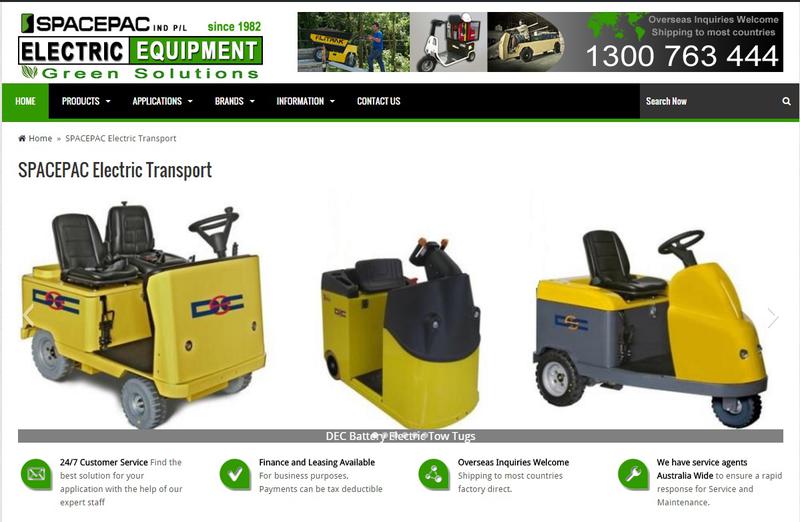
Spacepac Industries provides cost effective towing and pushing solutions using the latest European and Australian designed equipment. Our management established our initial Company in 1982. Spacepac…

Battery electric pushers / pullerstrolleysdumpers and tracked carriers.
Melbourne · Takes quote requests

Bicycle Superstore: Flemington

By appointment only · Flemington · VIC 3032

The first Bicycle Superstore was opened in 1986, in Dandenong, Victoria. It quickly became an icon in the bicycle industry, with people from all over traveling to experience the huge range and great…

Car and BoatingElectric Powered VehiclesRetailRecreation & Hobbies
Melbourne · Takes quote requests

Electric Vehicles

By appointment only · Knoxfield · VIC 3180

The world is becoming more and more aware about the environment and as a result eco-friendly way of commuting from one place to another is sought-after. Now, Electric Vehicles is answering this…

Car and BoatingElectric Powered Vehicles
Gold Coast · Takes quote requests

eCar Commercial Pty Ltd

By appointment only · Hope Island · QLD 4212

eCAR Commercial is one of the leading sources of electric utility vehicles for sale in Australia. They offer great selection of durable, affordable and energy saving golf carts, tour buses, fire…

Car and BoatingElectric Powered Vehicles

Electric Powered Vehicles by region

User guide to Electric Powered Vehicles

With many vehicles today that contribute to global warming, more and more people are becoming aware of the negative impact of the combustion engine to our environment. Research has led to the development of more environmentally safe vehicles that people can use. Despite its many positive effects, however, this technology is relatively young and will need more time to develop into better and safer commercial modes of transportation.

Electric powered vehicles use one or more electric motors for propulsion. Electricity can be generated from a wide range of sources and transmitted to the vehicle through the use of wireless energy transfers or direct connection through an electric cable. The electricity is then stored on the vehicle?s battery or super-capacitors. Regenerative braking and suspension are among the key advantages of electric vehicles since it has the ability to recover and store energy during braking.

The motor of an electric powered vehicle is measured in kilowatts wherein 100 KW is equivalent to approximately 134 horsepower. However, the exact performance is not equivalent since it can far exceed the 134 horsepower motor which has a limited torque curve.
The most common electric vehicle types include:

  • Hybrid electric vehicle ? combines a conventional combustion engine with some form of electric propulsion.
  • On- and off-road vehicles ? examples are electric cars, electric bicycles and motorcycles, scooters, all-terrain vehicles and tractors.
  • Railway electric vehicles ? makes use of permanent overheard lines or electrified third rails used for transfer of energy and propulsion.

Most large electric transport systems make use of stationary sources of electricity that provide power to the vehicles through wires. Motion is provided by a rotary electric motor.
Electric powered vehicles all rely on power generated by power plants and since there different methods of charging possible, the emissions produced and the consumption characteristics are different. Furthermore, charging typically takes place in conventional power outlets or dedicated charging stations. It usually takes hours to completely charge the vehicle with enough electricity for normal everyday use.

In 1973, a nonprofit organisation called the Australian Electric Vehicle Association was established to promote greater awareness of electric vehicles and the use of its technology. It also provides a forum for social and technical communication to foster research and development of the technology. It represents the interests of people who support electric vehicles to all levels of government whenever possible.

The first mass-produced hybrid gasoline-electric car was introduced worldwide as the Toyota Prius. Many of the world?s major automobile companies have begun to develop electric powered cars to answer various environmental concerns related to motor vehicles.

Advantages of electric powered vehicles

    • Electric powered vehicles release almost no air pollutants compared to combustion engines at the place where they are operated.
    • Electric powered vehicles have less noise pollution and vibration as opposed to combustion engines.
    • Electric powered vehicles have no use for oxygen as opposed to internal combustion engines.
    • Electric powered vehicles have the ability to convert movement energy into stored electricity. This is extremely useful in reducing the total energy requirement of a regular trip.